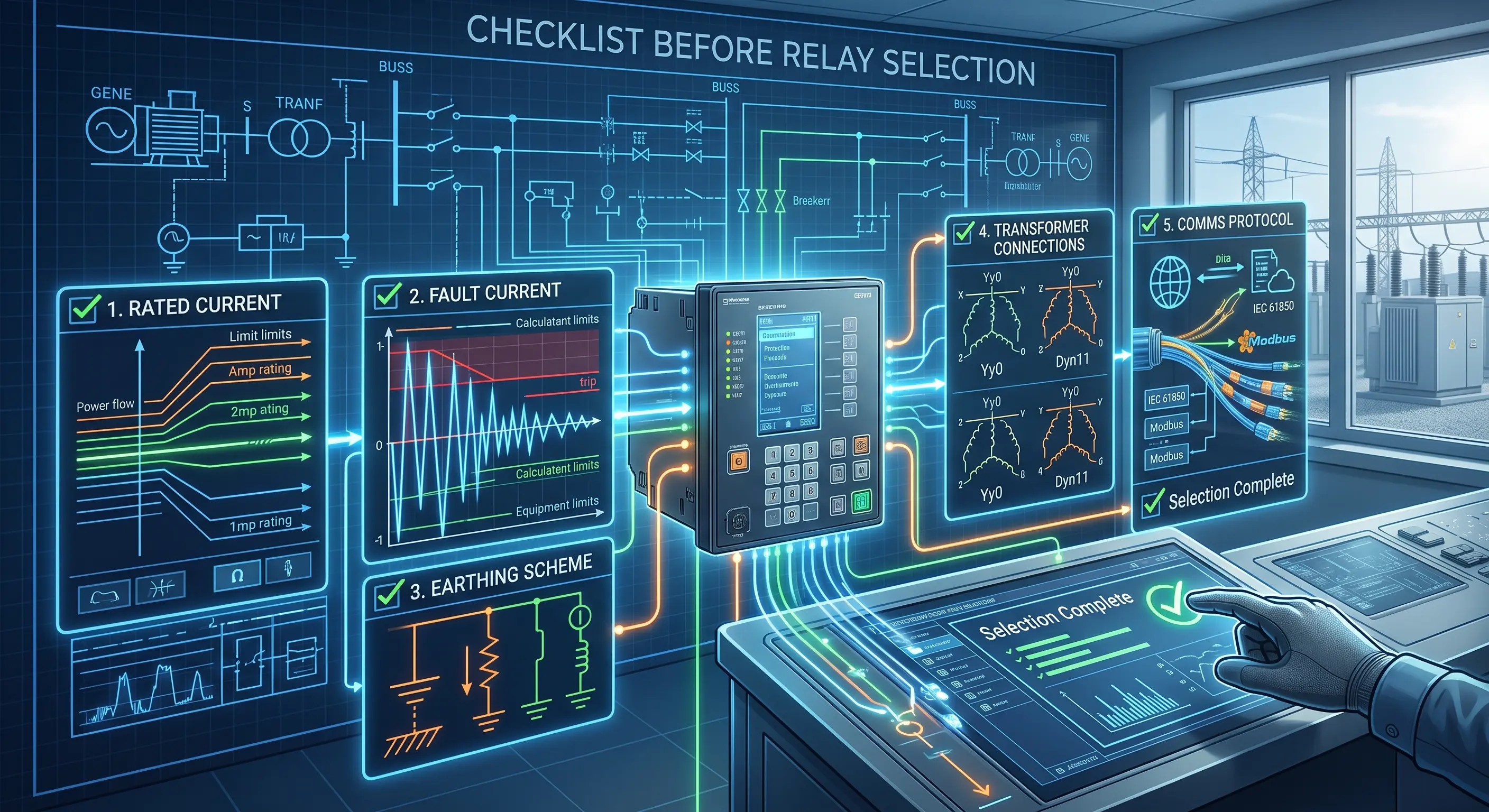
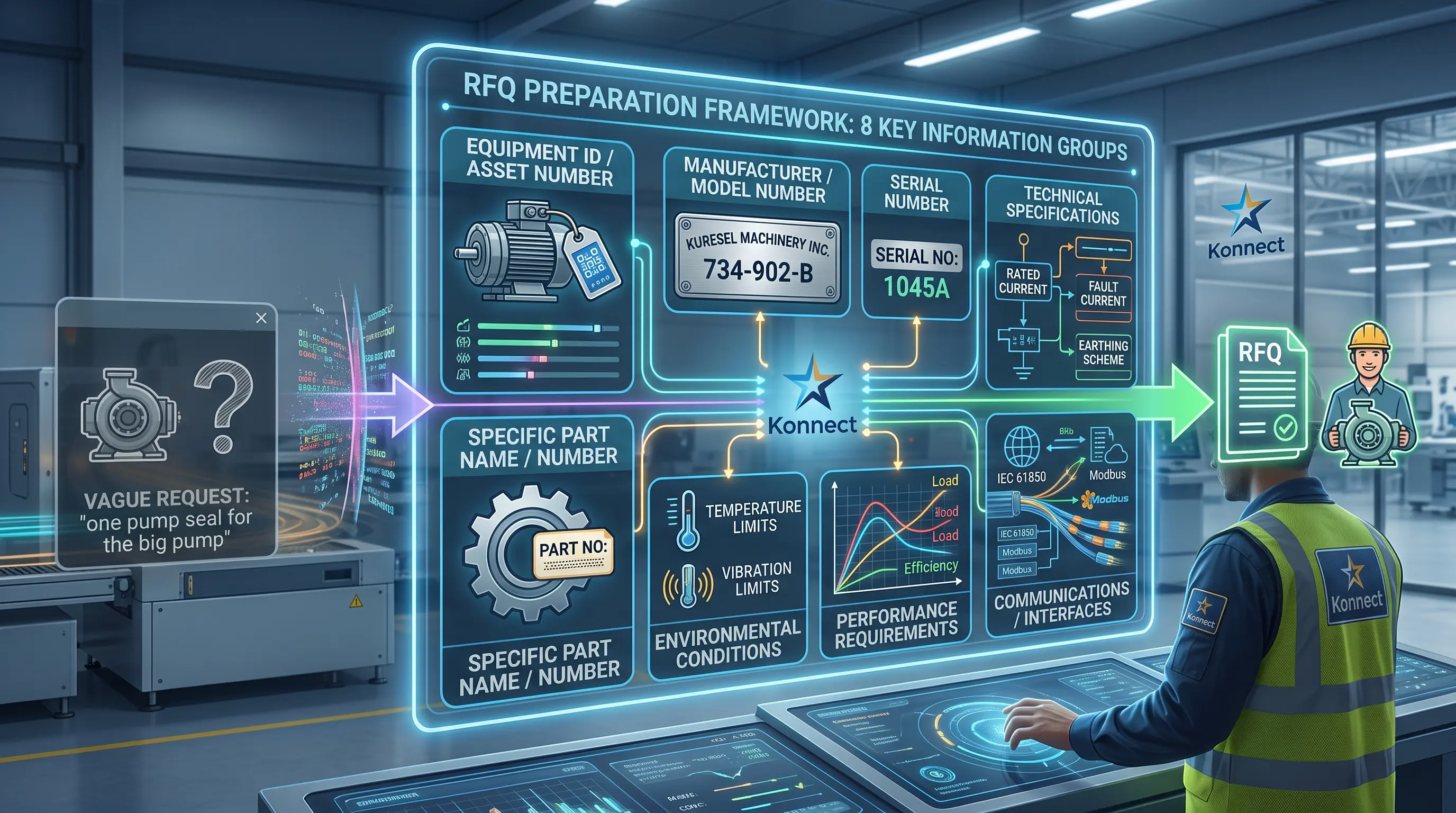
Choosing a protection relay is not a catalog-picking exercise. The right relay protects people and equipment; the wrong one trips too late, too early, or never. To get it right, you have to verify a specific set of technical parameters against your network's characteristics — rated and fault currents, earthing scheme, transformer connections, and the communications protocol your substation already speaks.
Here is the technical checklist you should work through before finalizing any protection relay selection, in the order you will likely need it.
Start with what the relay must protect
A protection relay is purpose-built for an application, so the first technical question is not "which relay" but "what asset." The correct relay family changes depending on whether you are protecting a feeder, a transformer, a capacitor bank, or a recloser:
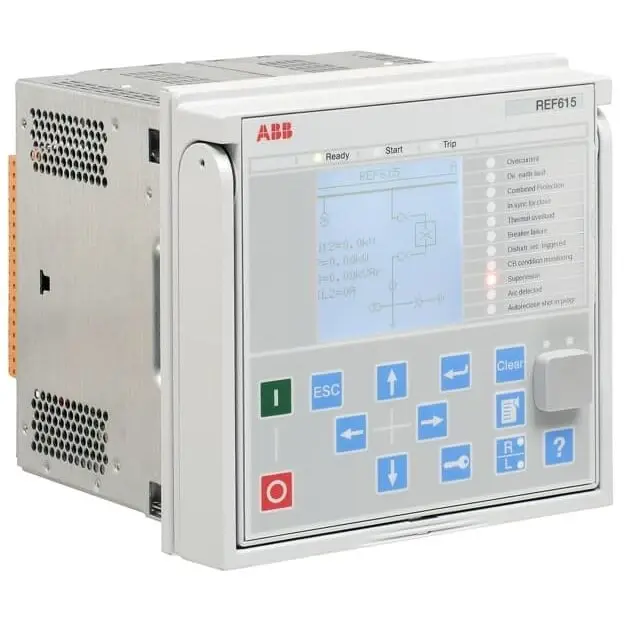
- Feeder protection needs directional and non-directional overcurrent and earth-fault functions, plus voltage, frequency, and power-based protection. A relay like the ABB REF615 feeder protection relay is designed for this overhead-line and cable-feeder role.
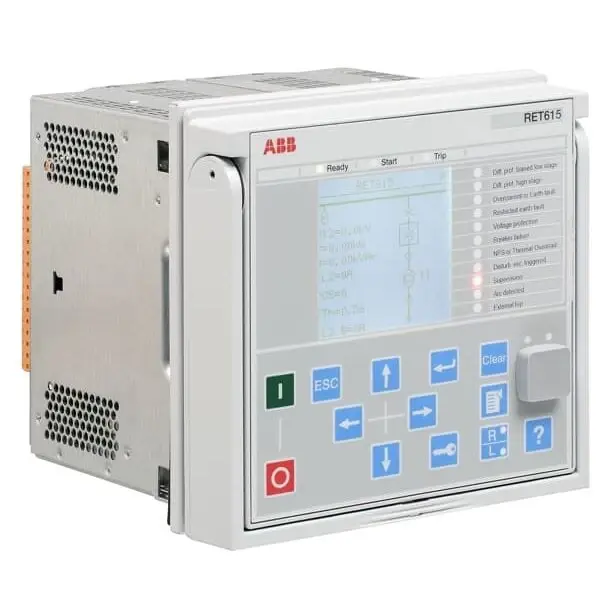
- Transformer protection requires differential protection with high inrush stability and support for your vector group. The ABB RET615 transformer protection relay consolidates differential, overcurrent, earth-fault, and voltage functions for two-winding transformers.
- Capacitor bank protection needs unbalance and overload algorithms tuned for H-bridge, double-Y, and single-Y configurations, such as the ABB REV615 overload relay.
- Motor / overload protection focuses on thermal and overload characteristics rather than feeder or differential functions.
- Earth-leakage protection for isolated or compensated networks benefits from sensitive multi-frequency admittance-based methods rather than plain overcurrent.
Mapping the asset to a relay class first keeps you from comparing the wrong candidates.
Confirm the electrical ratings of the system
Before any relay can work, its inputs must match the installed instrument transformers and the network it lives on. Verify these values explicitly:
- Rated frequency and voltage of the network (for example, 50 Hz vs. 60 Hz, 110 V or 220 V voltage inputs).
- Rated current of the connected CT secondary, commonly 1 A or 5 A.
- Instrument transformer compatibility — whether the relay accepts conventional CT/VT outputs, low-power sensor inputs, or both. Many modern relays such as the REF and RET 615 families accept both conventional and sensor inputs, which simplifies retrofit projects.
- Burden / input impedance, so the relay's secondary burden does not overburden the installed CTs.
- The earthing system (solidly earthed, impedance-earthed, isolated, or compensated) because it drives the earth-fault method the relay must support.
Confirm the protection functions you actually need
A protection relay can have dozens of protection elements, but you only pay for — and configure — the ones your application requires. The core checks are:
- Overcurrent protection: time-delayed and instantaneous overcurrent, directional and non-directional. If faults can feed back into the protection zone, directional overcurrent matters.
- Earth-fault protection: for compensated and isolated networks, look for multi-frequency or admittance-based earth-fault functions that deliver higher sensitivity and selectivity than plain residual current methods.
- Voltage and frequency protection: undervoltage, overvoltage, and abnormal frequency can be essential where the network is islanded or disturbed.
- Power-based protection: for load shedding or reverse power detection.
- Differential protection: required for transformer applications, with high inrush stability so the relay does not trip on magnetizing inrush current.
- Additional functions: breaker failure protection, and fault-locator features that speed up fault finding on the day an incident happens.
Choose a relay whose function set covers your minimum with headroom for future protection schemes — but avoid paying for protection you will never enable.
Verify the time–current characteristics
The relay must coordinate with upstream and downstream devices so that only the closest breaker to a fault trips. That coordination depends on time–current characteristics, defined in the relay's settings and validated against the system:
- Confirm the relay supports the inverse-time curves your coordination study depends on (standard inverse, very inverse, extremely inverse, and so on, per IEC 60255 and IEEE).
- Confirm definite time and instantaneous settings for fast fault clearing.
- Confirm that the trip outputs are fast enough for your application — for arc-flash protection, high-speed binary outputs matter and can reduce incident energy.
Make coordination the deciding test: if the relay's curve set cannot coordinate cleanly with your downstream breakers or fuses, it is the wrong relay regardless of the brand.
Check trip, supervision, and physical design
The relay lives in a panel and interacts with hardware. Confirm:
- Trip and binary output capacity: enough output contacts to trip the breaker, issue alarms, and drive signal applications. If arc-flash time is critical, high-speed outputs are worth verifying.
- Binary inputs: enough configurable inputs so you can wire position statuses, start commands, and reset controls.
- Withdrawable / plug-in design — a relay on a withdrawable chassis lets technicians install, test, and replace the unit without disconnecting wiring, cutting downtime during commissioning and maintenance.
- Auxiliary power supply range and its stability under voltage dips.
- Local and remote HMI: a local graphical display and a web-browser-based HMI speed up commissioning, configuration, and troubleshooting.
Verify communications and interoperability (IEC 61850)
Modern protection relays integrate with substation automation over standard protocols. This is frequently the most consequential technical check because it determines how the relay talks to your SCADA, bay controllers, and other relays:
- Protocols supported — IEC 61850 Editions 1 and 2 are now common; verify your substation's edition.
- Redundancy: confirm support for HSR and PRP if your network requires seamless failover.
- GOOSE messaging for fast horizontal communication between relays (for interlocking, blocking, or auto-restoration on a recloser, such as the ABB RER620 recloser control protection relay).
- Time synchronization, such as IEEE 1588 V2, because event sequences and disturbance records are only useful when all devices share accurate time.
If the relay does not speak the protocol your station uses, integration cost can quickly exceed the relay price.
Confirm standards and lifecycle suitability
Finally, confirm the relay meets the standards and longevity you require:
- Protection and EMC standards (IEC 60255, and applicable safety and emission standards) appropriate to your environment.
- Environmental suitability — operating temperature range, humidity, vibration, and whether the panel is indoor, outdoor, or hazardous.
- Lifecycle support — availability of documentation, firmware updates, and spare modules over the asset's intended life.
Conclusion
The right protection relay is the one whose input ratings match your CTs and network, whose protection functions match your asset and earthing scheme, whose curves coordinate with your downstream devices, and whose communications integrate with your substation. Work through that checklist in order, and the relay you select will do its job the day a fault occurs — not just on the spec sheet.
When you are ready to source or cross-reference a relay, find the correct spare part using its part number and make sure the variant matches your application's exact specifications before committing.